Learn the identity before entering the meeting
A convincing face gets you into the meeting; knowing the person's life keeps you there. In Legion Was Here, your best preparation is to inspect both sides of every document, record personal facts, and check your disguise before beginning infiltration.
You play Legion, a shapeshifting spy who impersonates people trusted by his targets. The tutorial describes two phases: Investigation and Infiltration. Investigation involves gathering evidence and reconstructing a face, followed by the conversation that tests both.
| Stage | Your task | What to finish before continuing |
|---|---|---|
| Briefing | Establish the assignment and assumed identity. | Know the client, target, location, and objective. |
| Dossier investigation | Connect photographs, letters, records, and objects. | Separate appearance evidence from personal history. |
| Facial reconstruction | Adjust Legion's features in the laboratory. | Check each feature against a specific clue. |
| Infiltration | Answer questions as the person you resemble. | Use identity facts and respond to the actual question. |
There is no timer or combat demanding quick reactions. Take time to resolve unclear dates and inspect photograph captions before proceeding.
Inspect the dossier and organize your notes
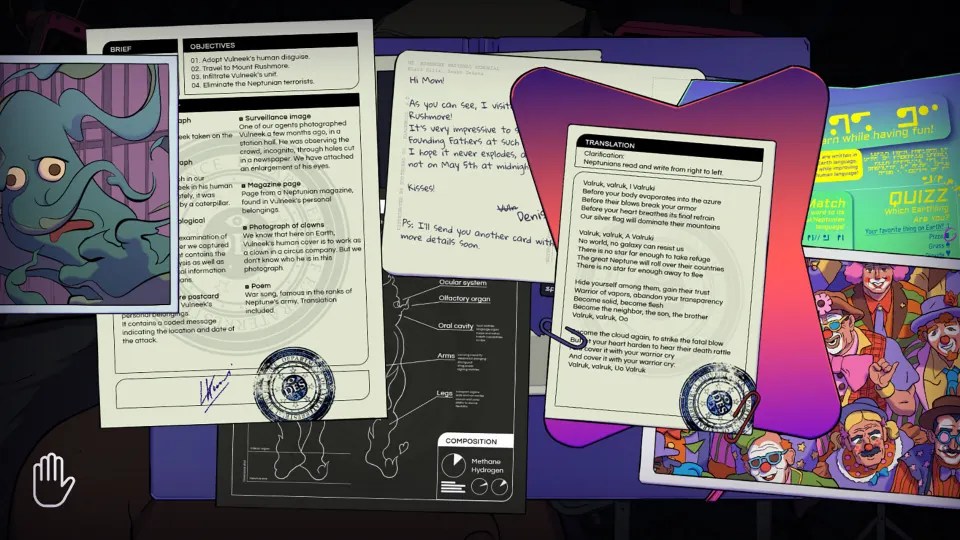
Read the Mission Order first. It explains whose identity you need and why the meeting matters, giving otherwise disconnected documents a useful context.
| Input | Action |
|---|---|
| Left click and hold | Pick up and move a document. |
| Space while holding left click | Flip the held document. |
| Hand icon or right click | Open notes; select a category and type with the keyboard. |
| Esc or the cross icon | Close the Mission Folder. |
Use this investigation routine:
- Expose every document. Move overlapping papers so small items and hidden edges become visible.
- Read both sides. Photograph captions, handwritten messages, and unrelated-looking articles can supply details missing from the front.
- Separate people and events. Record who attended a birthday, whose age is mentioned, and whether a meeting was the first or most recent.
- Preserve dates and relationships. “Alan's 12th birthday” is more useful than an unexplained number. Attach facts to the person or occasion they describe.
- Mark uncertain deductions. Separate direct statements from interpretations so you know which documents need another look.
The hand's categories organize likely conversation topics, including trips, eating habits, and shared celebrations. Write compact facts rather than paragraphs. “Greece — July” is easier to consult than a lengthy description of the beach photograph.
Reserve hand space for relatives, preferences, places, dates, and shared memories. The laboratory already preserves your appearance choices. Before leaving, check that your notes explain the relationships between people and events.
Reconstruct the disguise feature by feature
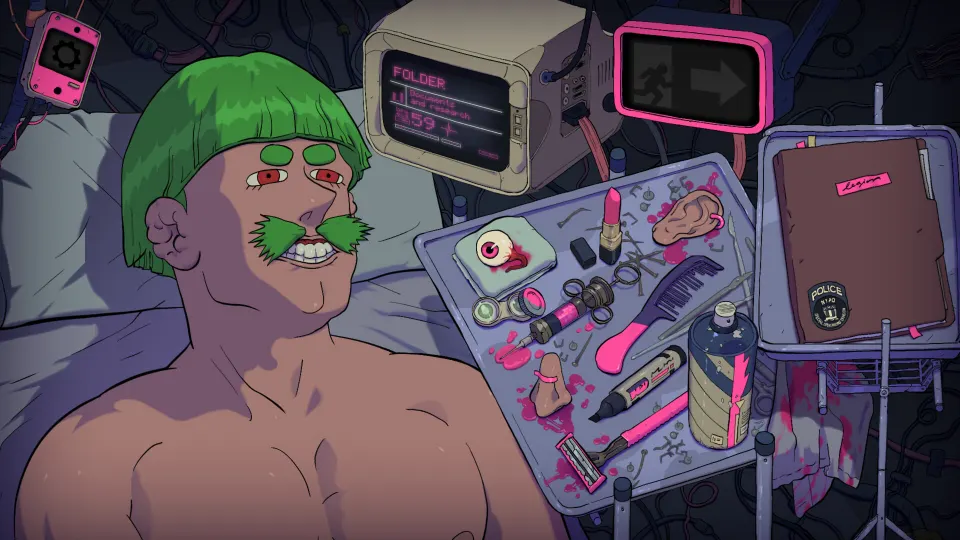
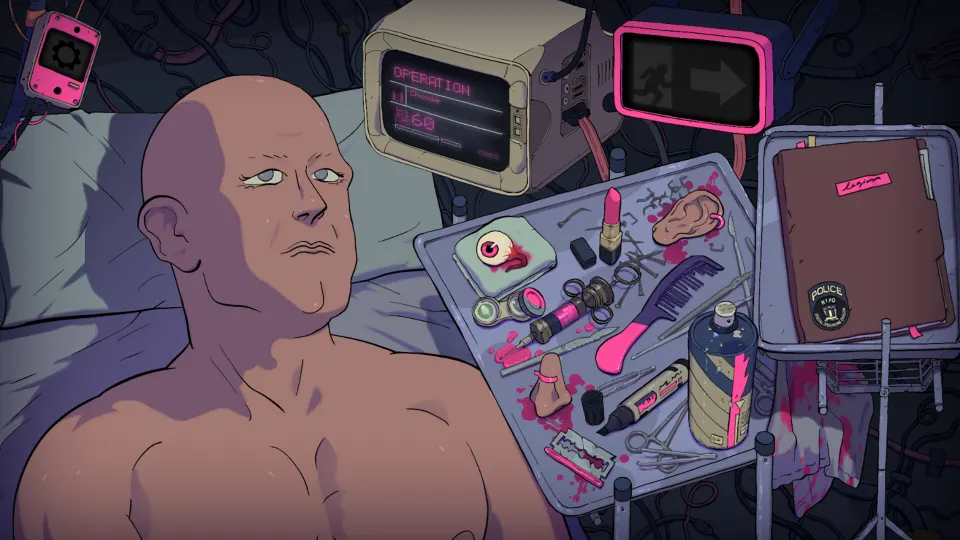
Build a face from evidence rather than choosing features that merely seem plausible together. Start with age and hair, then compare individual facial details. The laboratory monitor identifies hovered options.
| Appearance feature | Tool or evidence check |
|---|---|
| Eye shape | Use the eyeball tool and compare the outline with visual evidence. |
| Mouth shape | Use the lipstick tool to match the mouth. |
| Ears | Use the ear tool and inspect the visible proportions. |
| Eye color | Select the appropriate contacts. |
| Facial hair | Use the razor tool to match the beard, mustache, or stubble. |
| Nose shape | Use the nose tool and compare its form. |
| Eyebrows | Use the marker tool to match their shape. |
| Age | Use the stopwatch and check dated biographical clues. |
| Hair color | Use the spray can; written clues such as hair-dye purchases can help. |
| Hairstyle | Match the hair's shape using the available photographs or drawings. |
Age requires interpretation. Walkthroughs place Young around 18–30, Mature around the 30s–40s, and Senior around 50 or older. Treat those as approximate ranges. A birthday drawing establishes an age at a particular time, which may differ from the age relevant to the conversation.
A torn photograph only proves what its surviving portion shows. Use another document to fill the missing area. When evidence seems inconsistent, check whether images were made at different times or a written detail explains a change.
Before infiltration, check each feature against its clue instead of relying on the overall resemblance.
Use the mission clues to prepare answers
These routes cover Become Patrick, London Undercover, and Mafia Blues. Focus on the evidence relationships: question wording and conversation topics can vary between attempts.
Become Patrick
Alan Cotton's training assignment asks you to impersonate his friend Patrick. Although Alan arranged the exercise, your answers must maintain Patrick's identity. Announcing that you are Legion does not demonstrate a successful impersonation.
| Evidence | What to record or work out |
|---|---|
| Mission Order | Patrick and Alan met at Ocean World in Seattle, where Alan celebrated his 12th birthday. |
| Reverse of the beach photograph | The holiday was in Greece in July. |
| Birthday drawing and message | The message marks Patrick's 36th birthday; account for elapsed time when asked about another birthday. |
| Costume in the drawing | Use the outfit to identify the celebration's theme. |
| Shopping list | Tofu, vegan cheese, and plant-based steak support vegan eating habits. |
| Named sauce purchase | Record Tokyo Delight soy sauce, including the brand. |
Keep Alan's acting career separate from Patrick's life. Patrick is outside the entertainment industry, while the birthday message connects Alan with Super Juju. Mixing those facts can produce an answer that belongs to the wrong person.
For a dinner question, eliminate meals incompatible with Patrick's diet. This is more dependable than memorizing an answer's position in the menu.
London Undercover
Legion assumes the identity of arms dealer Claude Roy to approach Lydia Wu. Prepare both the business cover and personal history: Wu expects someone she already knows.
Cross-reference Roy's identity sketch, clinic record, and the newspaper's cultural listings. Keep the first meeting separate from the latest meeting, especially their dates, locations, and clothing. Those details answer different questions about the same relationship.
The amusement-park email and surveillance photographs establish earlier shared experiences. Wu's accessories provide clues to her musical interests. When the real Roy appears, those memories become especially valuable; a convincing face alone cannot settle the dispute.
Mafia Blues
Legion impersonates Mickey Lucci to approach mafia boss Andrea Torrelino. The restaurant entrance and later conversation both require you to sustain that identity.
Use the OceanWorld postcard and surveillance evidence to reconstruct the recent trip. Family letters establish home life and relatives. Read the childhood sweetheart's letter alongside the obituary on the reverse of the film interview.
When Domizia appears, incorporate her revelations into your understanding of Mickey. Reconsider the flower, color, fruit, and vegetable questions using that information. An earlier guess should not become permanent simply because you wrote it down.
Diagnose failures and improve your score
A rejected disguise and a failed conversation call for different corrections. Identify where the attempt broke down. Replacing a face that already passed inspection can introduce problems while leaving the missing identity fact unresolved.
Use the failure point to choose your next step:
- Rejected before meaningful conversation: Revisit uncertain appearance choices and look for documents you missed or failed to flip.
- Credibility drops after an answer: Identify the personal fact being tested, then correct the corresponding hand note.
- A date or age seems wrong: Check the document's date, the person it refers to, and whether the question concerns a past or upcoming event.
- New dialogue creates confusion: Return to the evidence instead of relying on remembered option numbers.
Some important wrong answers can end an attempt outright. Correct answers can restore room for mistakes, but not every error is recoverable. For a perfect result, match every appearance feature and answer every question correctly.
Before selecting a difficult response, eliminate choices that contradict established facts. Then ask whether the question concerns an event, its timing, or a personal preference. That distinction often reveals which note you need.
FAQ
How should I use this legion was here guide during a replay?
Start with the section matching your failure: dossier research, appearance, or conversation. Improve the missing evidence or note, then retry while keeping choices that already worked.
Can I consult notes during infiltration?
Yes. Notes written on Legion's hand remain accessible during the mission. Store concise identity facts, particularly names, relationships, dates, and preferences.
Is there a time limit?
The game allows play at your own pace, without timed input or combat. You can compare documents and consider answers without reacting quickly.
Does the correct disguise guarantee success?
No. Appearance helps you approach the target, but dialogue tests your knowledge of the assumed identity. Wrong personal details or inconsistent answers can still expose you.
Are questions identical on every attempt?
Missions do not always unfold the same way, and questions may change wording or topic. Learn why an answer fits the evidence so you can recognize it when the conversation changes.